

Introduction
The education industry is no longer confined to chalkboards and static PDFs. With the rise of digital transformation, 3D animation has emerged as a game-changing tool—bridging the gap between theory and practice, engagement and retention, and passive viewing and active exploration.
Whether it’s a medical student dissecting a virtual heart, a technician learning to operate industrial machinery, or a child exploring the solar system in 3D, animation is making education experiential, scalable, and inclusive.

How 3D Animation enhanced the learning process
Visualizing Complexity
3D animation allows learners to see inside systems, processes, and environments that are otherwise inaccessible.
- Example: A 3D animated HVAC system can show airflow, temperature zones, and component interactions—ideal for industrial training.
Boosting Engagement & Retention
Animated visuals activate multiple cognitive pathways—visual, auditory, and kinesthetic—leading to higher retention rates.
- Learners retain up to 80% more when content is visual and interactive compared to text-only formats.
Safe, Cost-Effective Simulation
Virtual labs and animated simulations reduce the need for expensive equipment and eliminate safety risks.
- Example: Chemistry experiments, surgical procedures, or mechanical breakdowns can be taught without physical exposure.
Personalized & Inclusive Learning
3D animation can be adapted for different learning styles, languages, and accessibility needs.
- Subtitles, voiceovers, and interactive controls make content more inclusive for neurodiverse and differently abled learners.
Real-World Impact: How 3D Animation Is Reshaping Learning
Medical Education: Virtual Dissection with 3D Anatomy Models
Medical schools and e-learning platforms are now using 3D animation to simulate human anatomy in stunning detail. Instead of relying solely on cadavers or static diagrams, students can rotate, dissect, and explore virtual organs in real time. This approach improves spatial understanding and procedural accuracy—especially in surgical training.
Example: Platforms powered by Whizzy Studios offer interactive 3D models that allow medical students to explore the human body layer by layer, enhancing retention and reducing dependency on physical labs.
Engineering & Vocational Training: Simulating Mechanical Systems
Engineering students and industrial trainees benefit from 3D simulations that replicate real-world machinery. From HVAC systems to robotic arms, learners can observe internal mechanisms, troubleshoot virtually, and understand operational workflows without physical risk.
Example: EdTech companies collaborate with animation studios to create 3D simulations of mechanical structures, enabling learners to manipulate components and run diagnostics in a virtual environment.
History & Humanities: Recreating Ancient Civilizations
3D animation is bringing history to life by reconstructing ancient cities, monuments, and cultural events. Instead of reading about the Roman Forum or the Indus Valley, students can walk through animated reconstructions and experience historical contexts firsthand.
Example: Educational apps now use 3D animation to let students explore ancient civilizations as if they were physically present—enhancing empathy, curiosity, and contextual learning.
Corporate Learning: Interactive Product Training
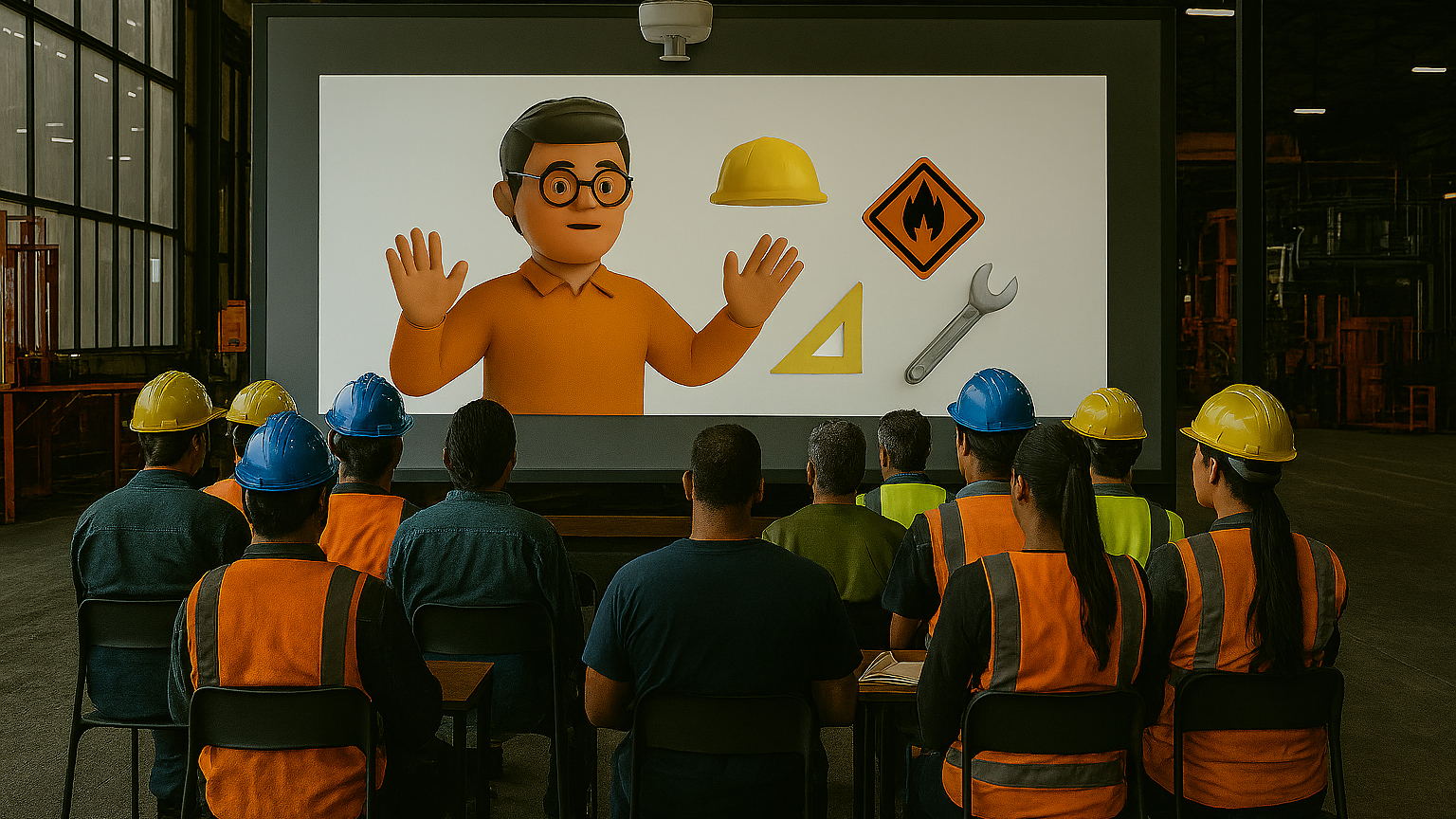
In corporate education, 3D animation is used to onboard employees, demonstrate product functionality, and teach safety protocols. Animated walkthroughs reduce training time and improve comprehension—especially for technical products.
Example: Industrial brands use 3D animated modules to train technicians on equipment handling, troubleshooting, and compliance procedures, often integrated into mobile apps or LMS platforms.
How Reality Premedia plays a transformative role
Reality Premedia empowers the education industry by transforming complex academic and technical subjects into immersive, easy-to-understand 3D animations. From medical simulations and engineering walkthroughs to historical reconstructions and industrial training modules, their visual content enhances clarity, engagement, and retention across diverse learning environments. By integrating AR/VR capabilities, multi-platform delivery, and precise storytelling, Reality Premedia enables institutions and edtech brands to scale high-impact educational experiences—bridging the gap between traditional instruction and modern digital pedagogy.
Conclusion
3D animation isn’t just a visual tool—it’s a strategic asset for the education industry. It empowers institutions to teach smarter, edtech brands to scale faster, and learners to grasp deeper. As immersive technologies evolve, animation will continue to be the bridge between knowledge and experience.


