

Visual appeal and seamless gameplay are important in capturing gamers’ attention and maintaining their attention in the highly competitive gaming industry today. Out of the many factors that contribute to a game’s success, high-quality 3D models are perhaps the most critical ones. They establish the beauty of a game and help in improving the optimization of games while increasing user engagement as well. In this article, we will discuss the investments game developers make in high-end 3D assets and their impact on the game’s quality.
The Role of 3D Models in Modern Gaming
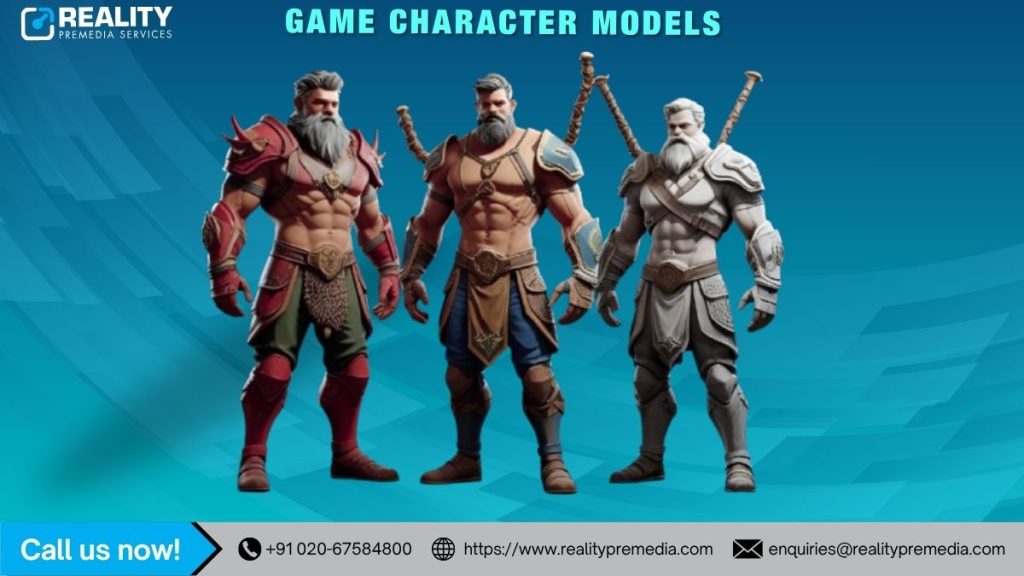
3D models are the digital visuals of characters, objects, and environments in a game. They offer the intricate, captivating visuals that players encounter and are the foundation of the game’s universe. Whether it’s breathtaking 3D environments or game characters, high-quality 3D models enhance the story of the game and its beauty.
Why Are High-Quality 3D Models Critical?
Enhancing Visual Realism and Immersion
One of the main reasons why high-quality 3D models are important is their capability of generating vivid and convincing worlds. Using the right textures, dimensions, and details makes characters and environments real and believable. This draws players further into the game, emotionally connecting them and improving immersion.
Boosting Player Engagement and Satisfaction
People are naturally attracted to visually appealing games. Well-made 3D models can trigger excitement, curiosity, and even awe. Players are more likely to remain engaged with the game, explore its world, and even play through it multiple times if they are greeted with elaborate character models and wonderful vistas. Positive reviews and word-of-mouth promotion also stem from engaging visuals
Supporting Brand Identity and Market Differentiation
In a saturated market, distinctive, memorable 3D models allow a game to differentiate itself from competitors. They reinforce branding while simultaneously leaving a strong impact on eye-catching character designs and unforgettable game environments. With these features, a game becomes easier to identify, market, and remember.
Optimizing for Smooth Gameplay
Paradoxically, when high-quality 3D models are designed with a game’s performance in mind, they can also improve it. Strongly optimized models, like decreasing polygon count while keeping detail, help improve loading times and overall smoothness. Methods such as Level of Detail (LOD) enable
Faster Load Times and Reduced Hardware Strain
Properly designed 3D models save both memory and rendering, leading to faster loading and reduced lag. This is crucial for high-end games on consoles and gaming laptops, where the user experience is highly dependent on performance.
Enabling Next-Gen Technologies
There is a growing need for optimized and detailed 3D models as gaming technologies like augmented reality (AR) or virtual reality (VR) continue to evolve. Well-optimized and visually stunning assets make sure that players get the best next-gen experience with emerging technologies.
Long-Term Benefits of Investing in High-Quality 3D Models
Cost and Time Efficiency
The investment put into creating high-quality assets pays off in the long run. High-quality 3D models boost productivity by minimizing the need for extensive revisions and making changes simpler for future updates or expansions.
Better Animation and Interactivity
High-quality models with proper topology and detailed meshes facilitate smoother animations and interactions. This results in more realistic character movements and dynamic environmental effects that make gameplay more engaging and believable.
Best Practices for Creating High-Quality 3D Models
To maximize the benefits of high-quality models, developers should adhere to best practices such as:
- Using optimized polygon counts for performance
- Applying realistic textures and materials
- Implementing proper UV mapping
- Creating Level of Detail (LOD) versions
- Ensuring compatibility with game engines like Unity or Unreal Engine
Conclusion
High-end 3D models are not simply eye candy—they’re a critical component that drives both game performance and player interaction. Whether it’s crafting engaging worlds and iconic characters or creating seamless gameplay and protecting against futureproofing through technological breakthroughs, shelling out top dollar on high-quality 3D assets is a requirement for any profitable game development undertaking.
Reality Premedia specializes in delivering high-quality 3D modeling and asset creation services tailored to the gaming industry. By leveraging advanced technologies and industry best practices, Reality Premedia helps game developers produce highly detailed, optimized 3D models that enhance visual realism, improve game performance, and boost player engagement.


