
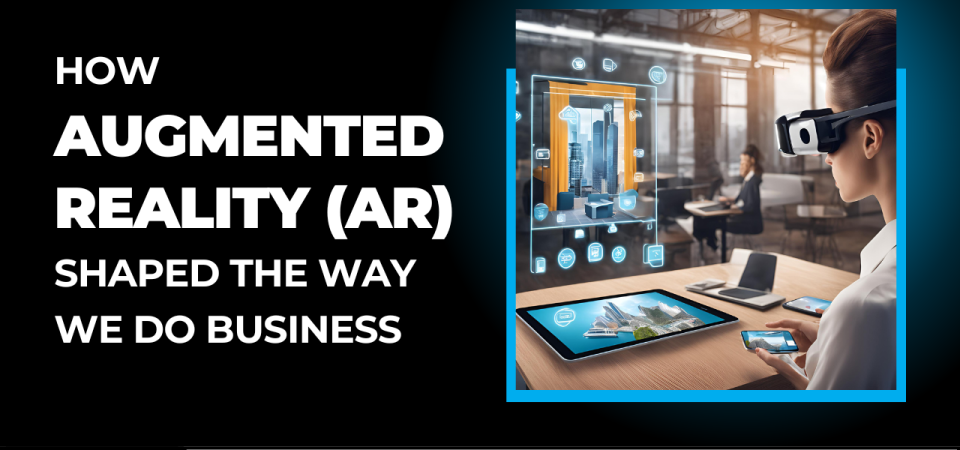
Augmented Reality is no longer just a concept for the future. It has become a key tool that is changing the way businesses operate by blending the digital and physical worlds. AR helps improve customer experiences, make training easier, speed up product design and make operations more efficient. This article will show how AR is making a difference in different areas of business with real examples and a look at future trends that will shape how AR will be used in the future.
1. Better Customer Experiences
AR is making shopping more interactive and fun. Instead of just looking at pictures online, customers can now use AR to see how products will look in their own space. This helps them make better decisions and feel more confident about their purchases. It also reduces the chances of returns because customers can see exactly what they are getting. Businesses that use AR can give customers a more personal experience that was not possible before.
Example: IKEA’s AR app lets customers see how furniture will look in their homes using their smartphones. This has made customers happier and lowered the number of returns.
2. Improved Employee Training
AR is making employee training easier and more effective. In jobs where accuracy is very important, AR can show workers exactly what to do by placing digital instructions on real objects. This makes learning faster and reduces mistakes. Employees can learn at their own pace and can go over difficult tasks as many times as they need to. This way of training helps employees become better at their jobs and remember what they learn for a longer time.
Example: Boeing uses AR glasses to show workers how to put together parts of an aircraft. This has cut down training time by 35 percent and has reduced mistakes.
3. Faster Product Design
AR is helping designers and engineers work faster by letting them see and change 3D models in a virtual space. This way, they can fix problems early and avoid the cost of making physical models. Teams can work together better because they can all see and change the same virtual model at the same time. AR makes the design process quicker and helps businesses get products to market faster.
Example: Ford uses AR in its car design process, which has made the design process faster and less expensive by reducing the need for physical models.
4. Easier Maintenance and Operations
AR helps make maintenance and operations easier by giving workers real time information and instructions. In places like factories or hospitals where the work is complicated, AR can show workers exactly what they need to do, right on the equipment they are working on. This helps them work faster and make fewer mistakes. AR also makes it possible for experts to help workers from far away by seeing what they see and giving them instructions. This makes operations smoother and more efficient.
For example, a technician working on a machine might see step-by-step instructions, diagrams, or even real-time data about the machine’s performance displayed right in front of them, as they are looking at the machine itself. This hands-free guidance helps them complete tasks more quickly and accurately, reducing the chances of errors.
Example: Siemens uses AR headsets to show maintenance workers the information they need right in front of them. This has made the work faster and more accurate.
5. Stronger Marketing Strategies
AR is changing how businesses do marketing by making it more interactive. Traditional marketing uses pictures and text, which can sometimes be boring. AR lets customers try out products in a virtual space, which makes shopping more fun and engaging. This not only makes customers more interested in the products but also gives businesses valuable information about what customers like. Using AR in marketing helps businesses stand out and build stronger connections with their customers.
Example: L’Oréal’s AR app lets users try on makeup virtually. This has made customers more interested in buying the products.
6. Future Trends in AR
AR is going to become even more common in business as technology gets better and more affordable. One trend is the use of Artificial Intelligence or AI with AR to make experiences more personalized and helpful. For example, AI could help create virtual shopping assistants that give customers advice based on their likes and past purchases. Also, as AR devices become cheaper, more small businesses will be able to use them. This will lead to new and creative ways to use AR in business.
AI will help make AR more personal, like virtual shopping assistants that give advice based on what customers like. As AR devices get cheaper, more businesses will start using them in new ways.
Conclusion
Augmented Reality is changing the way businesses work. It helps improve customer experiences, make training easier, speed up product design, and make operations more efficient. While there are challenges like high costs and the need for special skills, the benefits of AR are much greater. As AR technology continues to improve, it will play an even bigger role in how businesses operate in the future.
We create AR solutions that help businesses use this powerful technology. Whether you want to improve your marketing, training, or operations, our team can create AR experiences that fit your needs. Contact us today to learn how we can help you stay ahead with AR technology.


