
Introduction
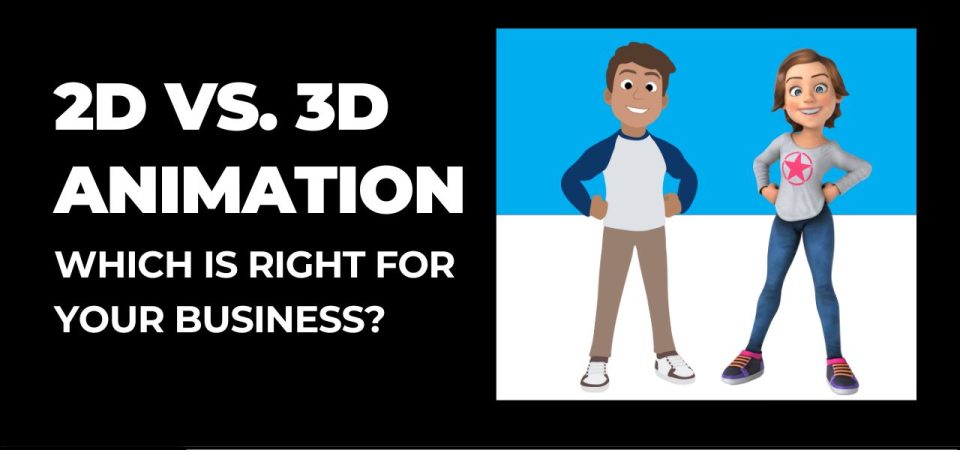
2D vs 3D Animation is an important consideration for businesses looking to create engaging content, explain complex ideas, and strengthen their marketing efforts. Both animation styles offer unique advantages depending on your goals, audience, and budget.
From explainer videos and social media campaigns to product demonstrations and brand storytelling, animation helps businesses communicate more effectively and capture audience attention. Choosing the right style can significantly impact the success of your content.
So, should you choose 2D Animation service or 3D Animation service? In this guide, we’ll compare 2D vs 3D Animation, exploring their benefits, differences, and business applications to help you make the right decision.

What is 2D Animation?
2D animation uses flat, two-dimensional graphics, characters, and environments. It is commonly used in explainer videos, advertisements, educational content, and social media campaigns.
Benefits of 2D Animation Service
- Cost-effective compared to 3D animation
- Faster production timelines
- Simple and easy-to-understand visuals
- Ideal for storytelling and explainer videos
- Highly flexible with unique artistic styles
Best Use Cases
- Explainer videos
- Corporate presentations
- E-learning content
- Social media marketing
- Product feature demonstrations
For businesses looking for engaging content on a controlled budget, 2D animation often delivers excellent results.
What is 3D Animation?
3D animation creates objects and environments with depth, realism, and lifelike movement. It allows viewers to experience products and concepts from multiple angles, making it ideal for complex visualizations.
Benefits of 3D Animation Service
- Realistic product representation
- Enhanced visual appeal
- Better depth and perspective
- Ideal for technical demonstrations
- Supports AR, VR, and immersive experiences
Best Use Cases
- Product visualization
- Industrial animations
- Medical animations
- Real estate walkthroughs
- Automotive demonstrations
- Architectural presentations
Businesses that need realistic visualization often choose 3D Animation Services to create powerful customer experiences.
2D vs 3D Animation Service: Key Differences
1. Cost – 2D Animation: More affordable and quicker to produce. 3D Animation: Requires modeling, texturing, lighting, and rendering, increasing production costs. Winner: 2D Animation for budget-conscious businesses.
2. Production Timeline – 2D Animation: Faster turnaround for marketing and explainer videos. 3D Animation: Takes longer due to multiple production stages. Winner: 2D Animation for speed.
3. Visual Impact – 2D Animation: Creative and engaging visual style. 3D Animation: Delivers realistic and immersive experiences. Winner: 3D Animation for premium visual presentation.
4. Product Demonstration – 2D Animation: Suitable for explaining concepts and processes. 3D Animation: Ideal for showcasing products with realistic detail and functionality. Winner: 3D Animation for product visualization.
5. Audience Engagement – 2D Animation: Works well for educational and explainer content. 3D Animation: Highly effective for technology, manufacturing, automotive, and real estate industries. Winner: Depends on your target audience and business goals.
When Should Businesses Choose 2D Animation?
Choose 2D animation if you:
- Need a cost-effective solution
- Have a limited production timeline
- Want an engaging explainer video
- Need frequent content updates
- Focus on storytelling and education
2D animation is ideal for startups, SaaS companies, educational organizations, and service-based businesses.
When Should Businesses Choose 3D Animation Service?
Choose 3D animation if you:
- Need realistic product visualization
- Sell complex or technical products
- Want premium-quality marketing content
- Require product demonstrations
- Plan to use AR or VR experiences
3D animation is commonly used by manufacturers, furniture brands, automotive companies, healthcare organizations, and real estate developers.
Which Animation Style Delivers Better ROI?
The answer depends on your business goals.
If your priority is educating customers quickly while maintaining a lower budget, 2D animation often provides a strong return on investment.
If your goal is to showcase product features, improve customer confidence, and create immersive experiences, 3D animation can generate greater long-term value.
Many businesses successfully combine both approaches, using:
- 2D animation for explanatory content
- 3D animation for product marketing and visualization
Why Reality Premedia for Professional Animation Services
Creating effective animation requires more than great visuals. It takes the right mix of creativity, storytelling, and technical expertise.
At Reality Premedia, we deliver 2D Animation Services and 3D Animation Services that help businesses explain ideas, showcase products, and engage customers more effectively.
Professional animation services help businesses:
- Improve customer engagement
- Simplify complex concepts
- Accelerate buying decisions
- Strengthen brand perception
- Increase marketing effectiveness
- Showcase products and services effectively
With experience across multiple industries, Reality Premedia creates animation solutions designed to support business growth and enhance customer communication.
Conclusion
Choosing between 2D and 3D animation comes down to your business objectives, budget, and audience preferences. 2D animation is more cost-effective and creatively flexible, making it suitable for businesses looking for quick turnaround times and distinct visual styles.
On the other hand, animated promotional video services using 3D animation offer unmatched depth and realism, making them ideal for industries that require detailed visualizations
At Reality Premedia we provide a range of animation services to help businesses leverage the power of both 2D and 3D animation. Whether you need engaging explainer videos, lifelike 3D product renders or creatively stylized marketing content our team of experts can help you achieve your visual storytelling goals.
Contact us to discuss your animation needs and bring your vision to life.


