
Introduction
The demand for photorealistic 3D visuals has surged across industries such as architecture, gaming, film, and e-commerce. Traditional rendering methods, while powerful, often require extensive hardware resources and long processing times. Today, Artificial Intelligence in 3D rendering is transforming this landscape. By leveraging machine learning and advanced algorithms, AI enables faster workflows, hyper‑realistic textures, and scalable production pipelines that empower businesses to deliver immersive experiences at lower costs.
How AI Accelerates Rendering
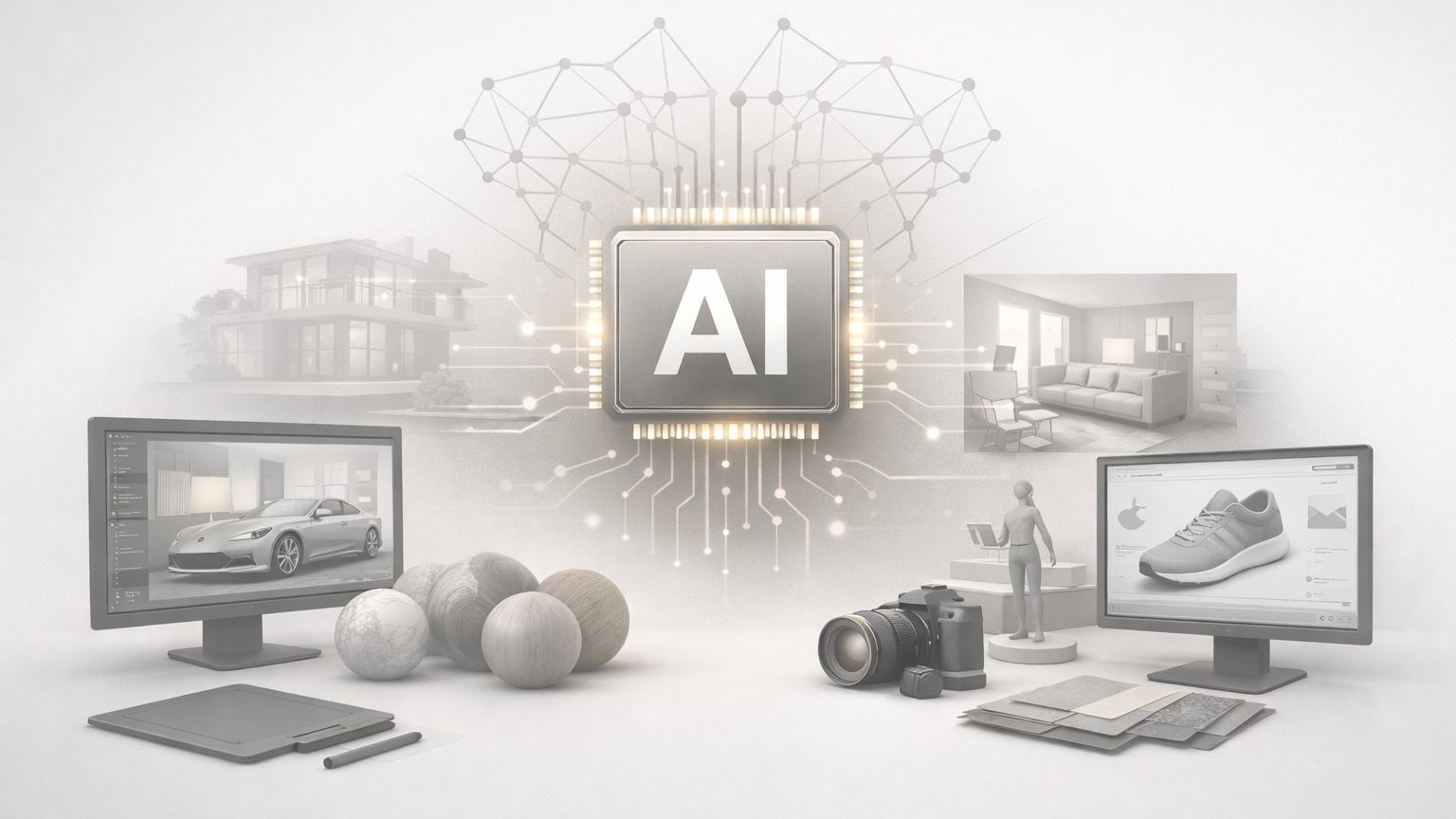
AI introduces automation and intelligence into rendering pipelines, making them faster and more efficient.
- Predictive Rendering allows neural networks to forecast lighting, shadows, and reflections without exhaustive ray tracing.
- AI Denoising cleans noisy renders, enabling artists to achieve clarity with fewer passes.
- Automated Optimization streamlines geometry and textures, reducing file sizes and render times.
- Real‑time Feedback empowers designers to preview changes instantly, accelerating creative iteration.
Enhancing Realism with AI
Artificial Intelligence doesn’t just make rendering faster—it makes it better.
- Material Recognition ensures accurate reflections and refractions for glass, metal, and fabric.
- Procedural Textures generate lifelike surfaces without repetitive patterns.
- Lighting Intelligence mimics natural daylight, indoor ambience, or cinematic effects with minimal manual setup.
- Generative Adversarial Networks create hyper‑realistic textures and upscale entire 3D scenes, making environments more immersive and visually compelling.
Commercial Applications of AI in 3D Rendering
AI is now a commercial necessity across industries:
- Architecture: AI generates photorealistic walkthroughs of buildings before construction begins, helping architects and clients visualize projects with precision.
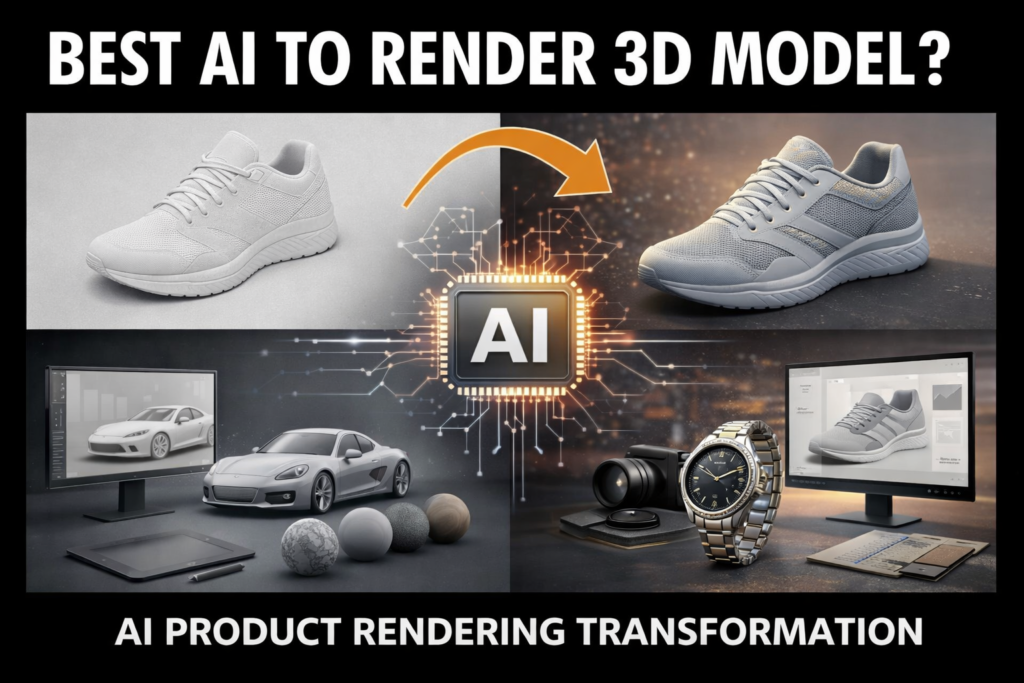
- Product Visualization: E‑commerce brands render thousands of product variations quickly, supporting AR try‑ons and immersive catalogs.
- Gaming: Real‑time AI rendering enhances immersive environments with high frame rates and realistic lighting.
- Film & Animation: Studios automate shading and lighting, reducing production timelines while maintaining artistic quality.
- Medical Visualization: AI builds accurate 3D models of organs and equipment for training, research, and patient education.
Business Benefits of AI in Rendering
For companies and creative agencies, the adoption of AI in 3D rendering delivers measurable impact:
- Speed: Rendering times drop from hours to seconds, accelerating project delivery.
- Cost Efficiency: Reduced reliance on GPU farms and expensive photo shoots.
- Scalability: Bulk rendering for catalogs, AR/VR assets, and immersive experiences.
- Customer Engagement: Interactive visuals increase conversions and reduce product returns.
- Competitive Edge: Early adopters position themselves as leaders in digital visualization.
Challenges to Consider
Despite its advantages, AI in 3D rendering comes with challenges:
- Creative Control: Over‑automation may limit artistic nuance.
- Workflow Integration: Requires training and adaptation to existing pipelines.
- Accuracy Gaps: AI predictions may miss subtle physical details.
- Ethical Transparency: Businesses must disclose AI‑generated assets to avoid misleading consumers.
Conclusion
Artificial Intelligence in 3D rendering is no longer experimental—it is a commercial necessity. From architecture firms to global e‑commerce giants, businesses are leveraging AI to deliver faster, more realistic, and cost‑effective visuals. By integrating techniques such as Generative Adversarial Networks, predictive rendering, and AI denoising, companies can scale production, engage customers more effectively, and gain a competitive edge. While challenges remain, the future of rendering is undeniably AI‑driven, and those who embrace it will lead the way in digital visualization.


