
Introduction
Generative Adversarial Networks (GANs) are revolutionizing 3D rendering, computer graphics, and digital visualization. By combining a generator that produces synthetic data with a discriminator that evaluates realism, GANs can deliver hyper‑realistic textures and upscale entire 3D scenes with unmatched precision. This breakthrough is transforming industries such as gaming, architecture visualization, film production, and e‑commerce, where photorealism and efficiency are essential.
Hyper‑Realistic Textures with GANs
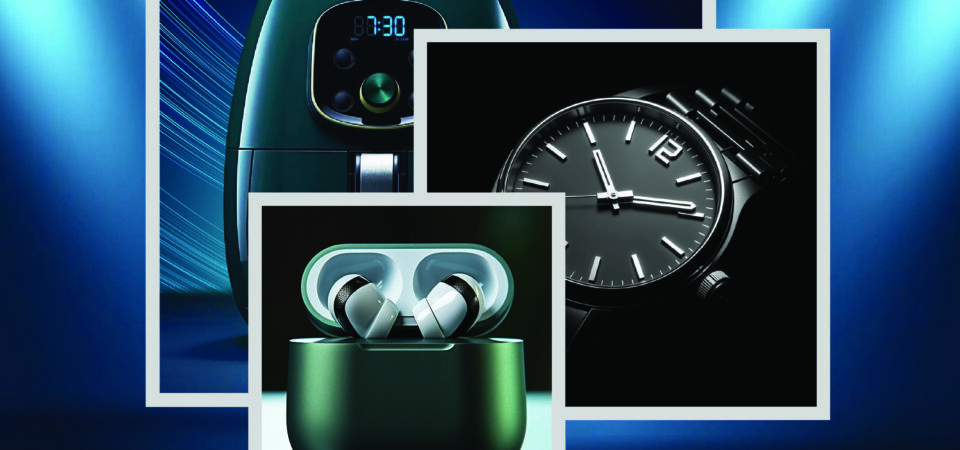
GANs excel at texture generation, replicating fine details like skin pores, fabric weaves, or reflections on glass. These lifelike textures enhance immersive gaming environments, Industrial walkthroughs, and product visualization for e‑commerce. By learning from vast datasets, GANs eliminate the need for manual adjustments, making photorealistic rendering faster and more scalable.
Upscaling Entire 3D Scenes
Beyond textures, GANs can upscale entire 3D environments while preserving geometry, lighting, and material fidelity. This reduces rendering time and computational overhead, enabling studios to deliver high‑quality visuals at scale. For industries like architecture and cinematic animation, GAN‑powered upscaling ensures smoother workflows and more compelling presentations.
Dynamic Adaptability
GANs adapt seamlessly to lighting changes and viewpoint shifts, reducing the need for repeated rendering passes. This adaptability is crucial for virtual reality (VR) and augmented reality (AR) experiences, where immersive storytelling depends on consistent visual fidelity across perspectives.
Industry Applications
GANs are reshaping multiple sectors:
- Gaming: Realistic character skins and immersive worlds.
- Architecture: Photorealistic interiors and exteriors for client presentations.
- E‑commerce: Lifelike product textures that boost consumer trust and conversions.
- Film and Animation: Upscaled cinematic scenes that save production time and costs.
Technical Advantages
- Efficiency: Reduced computational overhead by avoiding repeated rendering passes.
- Scalability: Ability to process thousands of assets simultaneously.
- Quality Metrics: Superior performance in Frechet Inception Distance (FID), a benchmark for texture realism.
Challenges and Risks
- Training instability: Sensitive to hyperparameters, requiring careful fine‑tuning.
- Data dependency: High‑quality datasets are essential for realistic outputs.
- Computational demand: Training GANs requires advanced GPUs and significant resources.
Reality Premedia: Driving Innovation with GANs
At Reality Premedia, GANs are integrated into workflows to deliver hyper‑realistic 3D textures, immersive AR/VR experiences, and scalable video production. By combining technical precision with emotional storytelling, Reality Premedia positions itself as India’s benchmark agency for 3D animation, augmented reality trade show technology, and commerce‑ready asset validation.
Through GAN‑powered rendering, Reality Premedia helps brands achieve:
- Faster project delivery with reduced manual intervention.
- Conversion‑focused visuals for e‑commerce and digital campaigns.
- Immersive storytelling in architecture, gaming, and film.
This fusion of AI‑driven innovation and creative strategy ensures Reality Premedia remains at the forefront of digital visualization and content production.
Conclusion
Generative Adversarial Networks are more than a technical breakthrough—they are a creative enabler. By producing hyper‑realistic textures and upscaling 3D scenes, GANs empower industries to achieve photorealism at scale. With agencies like Reality Premedia leading the way, GANs are set to redefine the future of animation, AR/VR, and immersive storytelling, bridging the gap between imagination and reality.


