
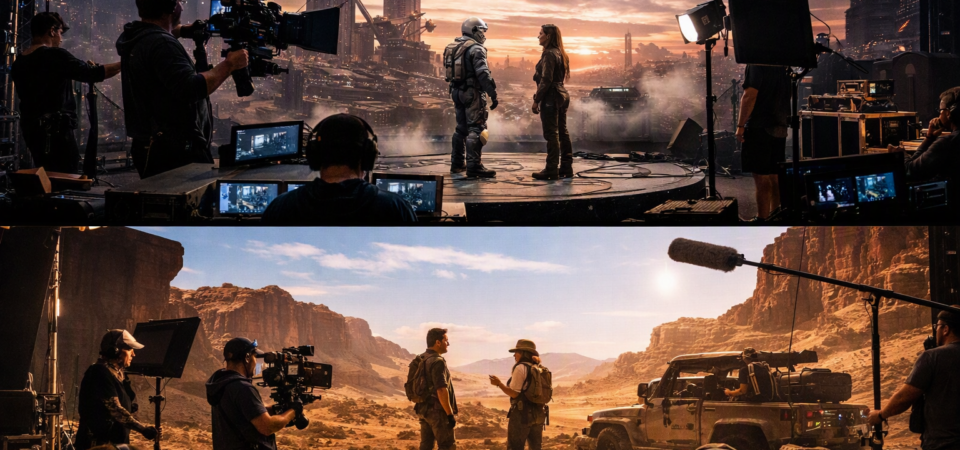
Virtual production has emerged as one of the most revolutionary shifts in modern filmmaking, blending real‑time rendering with live action to create immersive, efficient, and visually stunning experiences. By leveraging advanced rendering engines, LED walls, and interactive workflows, studios are redefining how stories are told on screen.
What Is Real‑Time Rendering?
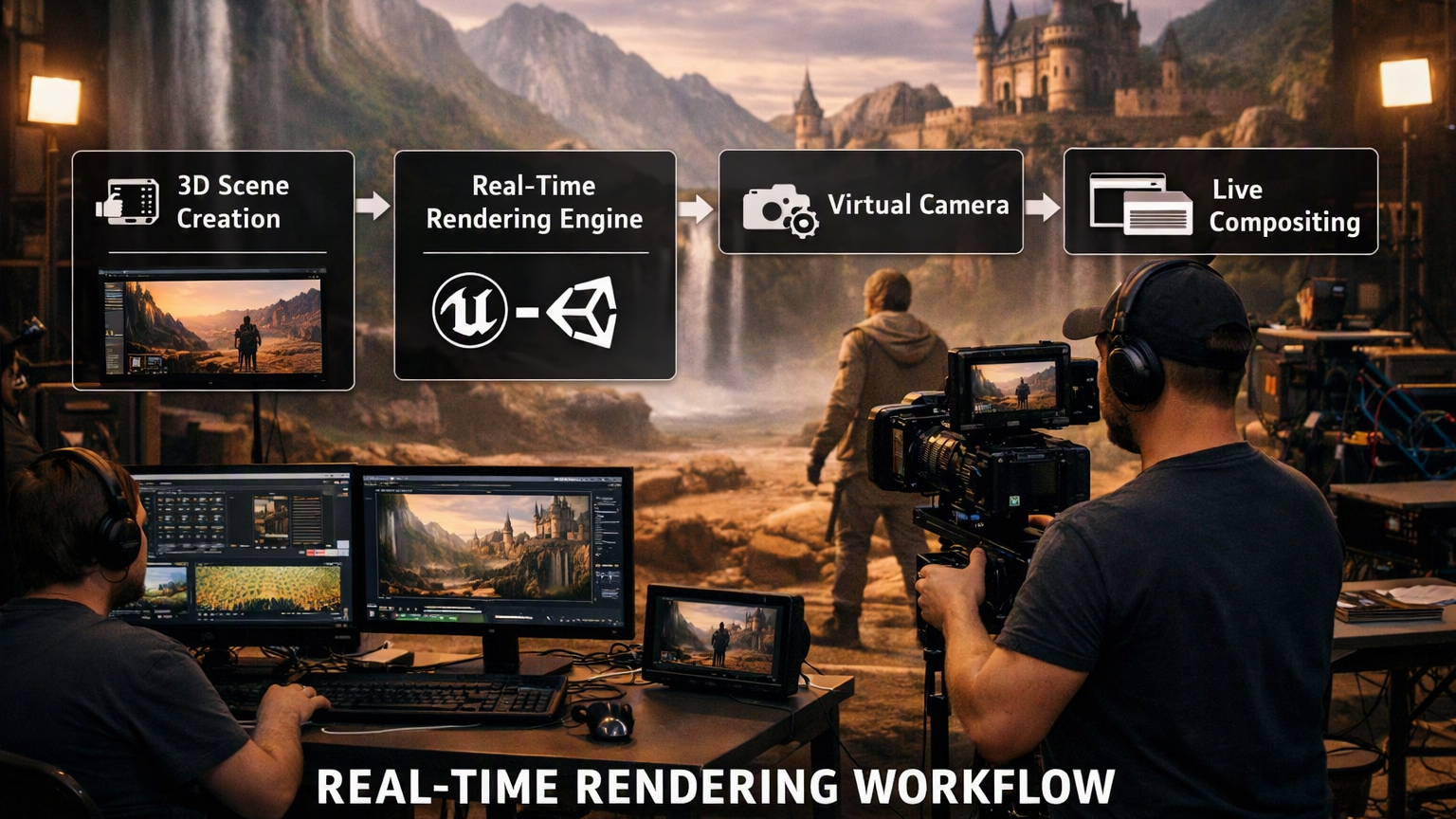
Real‑time rendering refers to the process of generating computer‑generated imagery (CGI) instantly, allowing directors, cinematographers, and production teams to visualize digital environments as they shoot. Unlike traditional pre‑rendered animation, which requires hours or days of processing, real‑time rendering delivers immediate results.
This capability is powered by engines such as Unreal Engine and Unity, which provide photorealistic graphics and interactive control during live filming.
LED Walls and Virtual Sets
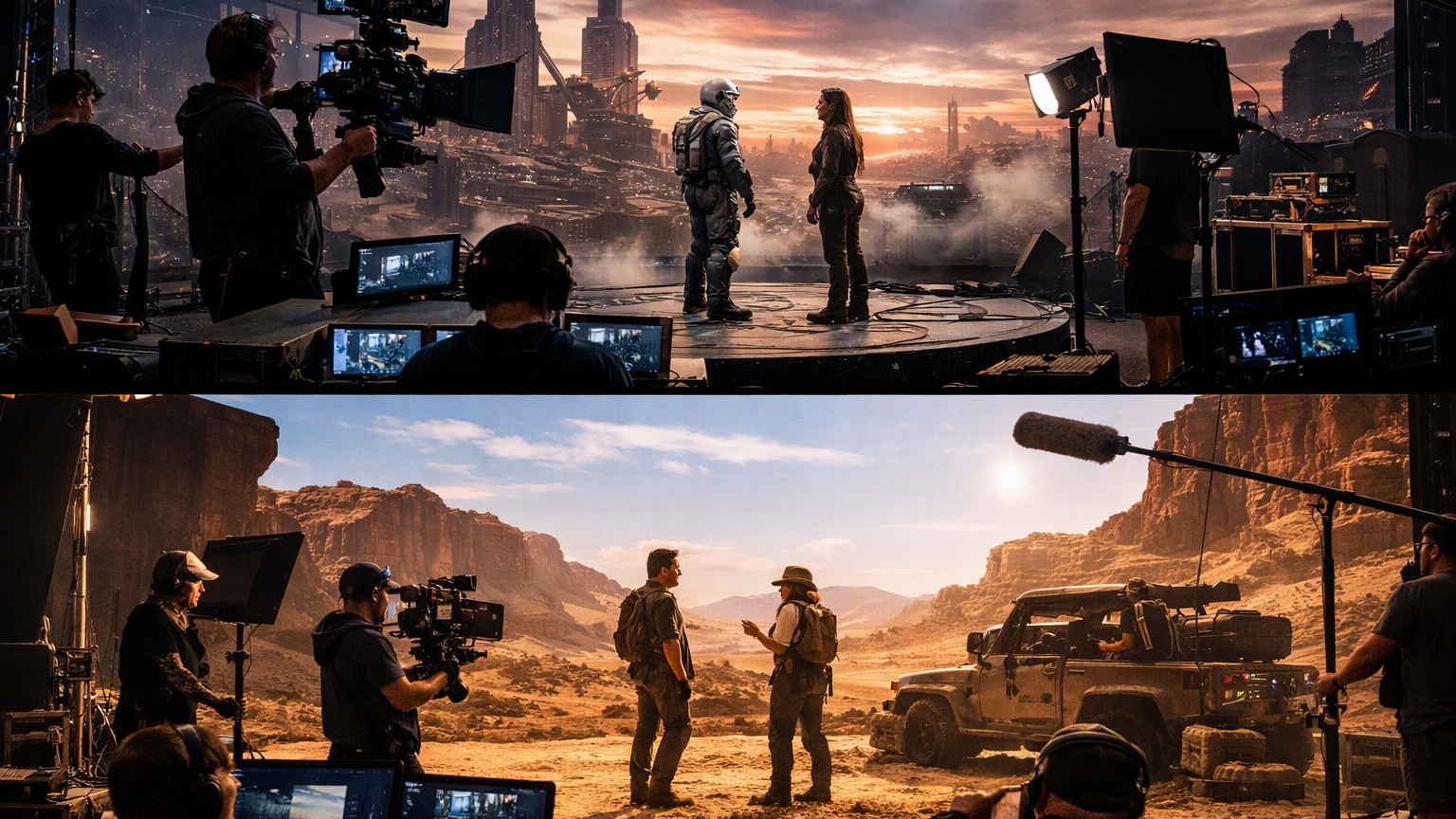
One of the most iconic innovations in virtual production is the use of LED walls. Instead of relying on green screens, massive LED panels project dynamic environments behind actors.
- Actors interact naturally with the digital backdrop.
- Lighting and reflections from the LED walls integrate seamlessly with real props.
- Directors can adjust to environments instantly, from desert landscapes to futuristic cities.
This approach eliminates the disconnect often seen with green screens, creating authentic performances and reducing post‑production complexity.
Benefits of Real‑Time Rendering in Filmmaking
The adoption of real‑time rendering offers several advantages:
- Efficiency gains: Directors can make creative adjustments on the spot, reducing costly reshoots.
- Cost reduction: Post‑production workloads shrink significantly.
- Creative freedom: Teams can experiment with lighting, camera angles, and environments instantly.
- Collaboration: Real‑time visualization fosters better communication between departments.
Use Cases Across Industries
While filmmaking is the most visible application, real‑time rendering extends far beyond Hollywood:
- Film: Enables faster scene adjustments and immersive storytelling.
- Advertising: Brands create interactive campaigns with dynamic visuals.
- AR/VR: Powers immersive experiences in gaming and virtual events.
- Training simulations: Used in defense, healthcare, and aviation for realistic practice environments.
Real‑Time Rendering vs Pre‑Rendered Animation
Choosing between real‑time rendering and pre‑rendered animation ultimately depends on the project’s goals, timelines, and creative requirements.
- Real‑time rendering offers speed and adaptability. Directors and artists can see changes instantly, experiment with lighting or camera angles on the spot, and collaborate more effectively. This makes it ideal for gaming, AR/VR experiences, and live virtual production where flexibility is crucial. The trade‑off is that it requires powerful hardware and may not always achieve the ultra‑fine detail of offline rendering.
- Pre‑rendered animation delivers unmatched cinematic quality and intricate detail. It’s the go‑to choice for high‑budget films, architectural visualization, and projects where photorealism is non‑negotiable. However, it is time‑intensive, less flexible, and often demands longer post‑production cycles.
In short, real‑time rendering prioritizes speed and interactivity, while pre‑rendered animation emphasizes precision and polish. Filmmakers and studios often blend both approaches — using real‑time rendering for dynamic previews and pre‑rendered animation for final shots — to balance efficiency with artistry.
Future of Virtual Production
The future of virtual production lies in deeper integration of AI, cloud rendering, and immersive collaboration tools.
- AI‑driven rendering will automate texture generation and scene optimization.
- Cloud rendering will allow studios to stream high‑fidelity visuals across devices.
- Immersive collaboration will connect global teams in real‑time creative workflows.
As these technologies mature, filmmakers will gain unprecedented control over storytelling, blending imagination with technical precision.
Conclusion
Real‑time rendering in virtual production is not just a technological upgrade—it’s a creative revolution. By merging interactive rendering engines, LED walls, and cross‑platform optimization, studios can deliver immersive experiences faster, cheaper, and with greater artistic freedom.
For filmmakers, advertisers, and AR/VR creators, embracing real‑time rendering means unlocking a future where imagination meets instant execution.


