
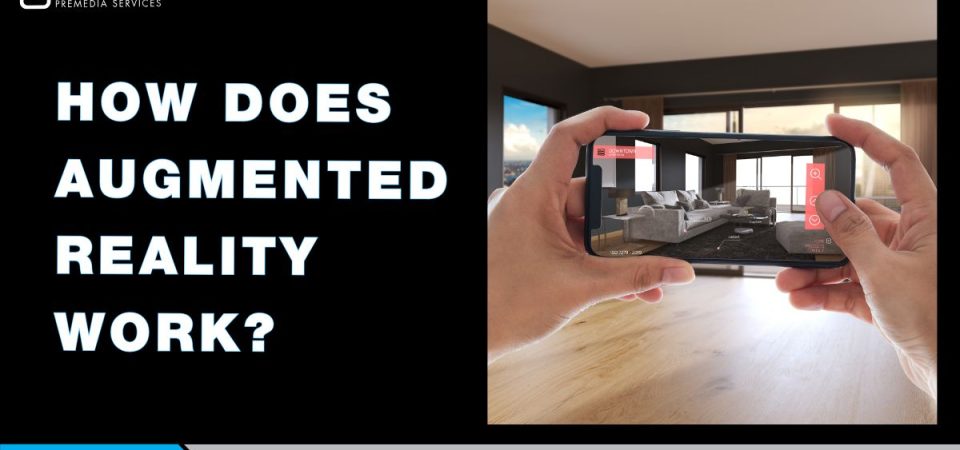
Augmented Reality (AR) is transforming the way people interact with digital content by overlaying virtual elements onto the real world in real time. Whether you’re using an AR shopping app, an interactive training solution, or a product visualization tool, AR blends digital information with physical surroundings to create immersive and engaging experiences.
In 2027, advancements in artificial intelligence, computer vision, spatial computing, and smart devices are making augmented reality more powerful and accessible than ever. Businesses across manufacturing, retail, healthcare, education, architecture, and marketing are increasingly adopting AR technology to improve customer experiences, streamline operations, and enhance training.
What is Augmented Reality?
Augmented Reality (AR) is a technology that adds digital content such as 3D models, animations, text, audio, or videos onto a user’s view of the physical environment in real time.
Unlike Virtual Reality (VR), which completely replaces the real world with a virtual one, AR enhances the existing environment by combining physical and digital elements.
Examples of AR include:
- IKEA Place showing furniture in your room
- Snapchat and Instagram filters
- Pokémon GO
- Interactive AR product demonstrations
- Industrial maintenance and training applications
Today, AR experiences can be accessed through:
- Smartphones
- Tablets
- Smart glasses
- Head-mounted displays
- Web browsers through WebAR

How Does Augmented Reality Work?
At its core, augmented reality works by collecting information from the real world, processing it through software, and displaying digital content that aligns accurately with the user’s surroundings.
Step 1: Capturing the Real Environment
AR begins with a device equipped with sensors and cameras.
These components collect data about:
- Objects
- Surfaces
- Depth
- Lighting conditions
- User movement
Common hardware includes:
- Smartphone cameras
- LiDAR sensors
- Depth cameras
- GPS
- Accelerometers
- Gyroscopes
This data helps the system understand the user’s environment.
Step 2: Computer Vision and Object Recognition
The AR software uses computer vision technology to analyze what the camera sees.
The system identifies:
- Physical objects
- Flat surfaces
- Product markers
- Human faces
- Spatial relationships
Modern AR applications utilize AI-powered recognition systems that can instantly identify products, equipment, machinery, or environments without needing physical markers.
Step 3: Mapping and Tracking the Environment
To accurately position digital content, AR applications use a technology called SLAM (Simultaneous Localization and Mapping).
SLAM helps the device:
- Map the environment
- Track movement in real time
- Determine distance and depth
- Maintain stable positioning of virtual objects
As users move around, the AR system continuously updates the scene to keep digital content correctly aligned.
Step 4: Rendering Digital Content
Once the environment is understood, the AR engine renders digital assets such as:
- 3D product models
- Animations
- Technical instructions
- Interactive dashboards
- Navigation guides
These assets are generated using 3D modeling and rendering technologies.
The virtual content appears anchored to physical objects, creating the illusion that digital elements exist in the real world.
Step 5: Real-Time Interaction
Users can interact with AR content through:
- Touch gestures
- Voice commands
- Motion tracking
- Hand gestures
- Eye tracking
For example, in a manufacturing environment, technicians can view maintenance instructions directly on equipment while performing repairs.
Key Technologies Behind Augmented Reality
Several advanced technologies make modern AR experiences possible.
Computer Vision
Enables recognition of objects, environments, and surfaces.
Artificial Intelligence
Improves object detection, scene understanding, and personalization.
Spatial Computing
Creates realistic interactions between digital and physical objects.
AR Cloud
Stores and shares persistent digital content across multiple devices and locations.
3D Modeling and Rendering
Produces realistic digital assets used within AR experiences.
WebAR
Allows users to access AR experiences directly through web browsers without installing apps.
Types of Augmented Reality
Marker-Based AR
Uses QR codes, images, or visual markers to trigger digital content.
Common applications:
- Product packaging
- Interactive brochures
- Marketing campaigns
Markerless AR
Uses sensors and computer vision to place content without requiring markers.
Common applications:
- Furniture visualization
- Product placement apps
- Interior design
Location-Based AR
Uses GPS and geolocation data.
Common applications:
- Navigation
- Tourism
- Gaming
Projection-Based AR
Projects digital information onto physical surfaces.
Used in:
- Manufacturing
- Industrial training
- Interactive displays
Real-World Applications of Augmented Reality
AR in Manufacturing
Manufacturers use AR to:
- Improve assembly accuracy
- Train employees
- Reduce maintenance downtime
- Visualize equipment before installation
AR in Retail and E-commerce
Retailers use AR for:
- Virtual try-ons
- Furniture placement
- Product visualization
- Interactive shopping experiences
AR in Healthcare
Healthcare organizations leverage AR for:
- Surgical planning
- Medical training
- Patient education
- Remote assistance
AR in Education
Educational institutions use AR to create:
- Interactive learning experiences
- Virtual laboratories
- 3D simulations
- Remote learning solutions
AR in Real Estate and Architecture
AR enables:
- Virtual property tours
- Building visualization
- Construction planning
- Interior design reviews
AR vs VR vs MR: What’s the Difference?
| Technology | Real World Visible | Digital Overlay | Immersion Level |
|---|---|---|---|
| AR | Yes | Yes | Moderate |
| VR | No | Fully Virtual | High |
| MR | Yes | Interactive | Very High |
AR enhances reality, VR replaces reality, and Mixed Reality (MR) allows digital and physical objects to interact with each other.
Benefits of Augmented Reality for Businesses
Organizations investing in augmented reality solutions gain:
- Better customer engagement
- Higher conversion rates
- Reduced training costs
- Faster maintenance processes
- Improved product visualization
- Enhanced remote collaboration
- Increased operational efficiency
As AR technologies continue to evolve, businesses that adopt them early can gain a significant competitive advantage.
How Reality Premedia Helps with Augmented Reality Services
At Reality Premedia, we provide end-to-end Augmented Reality Development Services designed to help businesses create immersive digital experiences.
Our AR solutions include:
- Product Visualization AR
- WebAR Experiences
- Interactive Marketing Campaigns
- AR Training Solutions
- AR for Manufacturing
- AR for Real Estate
- Custom AR App Development
- Enterprise AR Solutions
Using advanced 3D modeling, rendering, and AR technologies, we help brands increase engagement, improve customer experiences, and accelerate digital transformation.
Frequently Asked Questions (FAQs)
How does augmented reality work on a smartphone?
AR uses a smartphone’s camera, sensors, GPS, and AR software to analyze the environment and overlay digital content onto real-world views.
What technology is used in augmented reality?
AR relies on computer vision, artificial intelligence, SLAM, spatial computing, sensors, cloud computing, and 3D rendering technologies.
What industries use augmented reality?
Manufacturing, healthcare, retail, education, real estate, automotive, aerospace, and marketing industries widely use AR solutions.
Is augmented reality the same as virtual reality?
No. AR enhances the physical world by adding digital elements, while VR creates a completely virtual environment.
What are the benefits of augmented reality for businesses?
AR improves customer engagement, employee training, product visualization, operational efficiency, and purchasing decisions.
Conclusion
Augmented Reality is no longer a futuristic concept. It has become a practical technology helping businesses improve customer experiences, employee productivity, training, marketing, and product visualization. As advancements in AI, spatial computing, WebAR, and smart wearables continue, augmented reality will play a critical role in the future of digital experiences.
For companies looking to implement innovative AR solutions, partnering with an experienced Augmented Reality Development Company like Reality Premedia can help transform ideas into immersive, business-driven experiences.


